
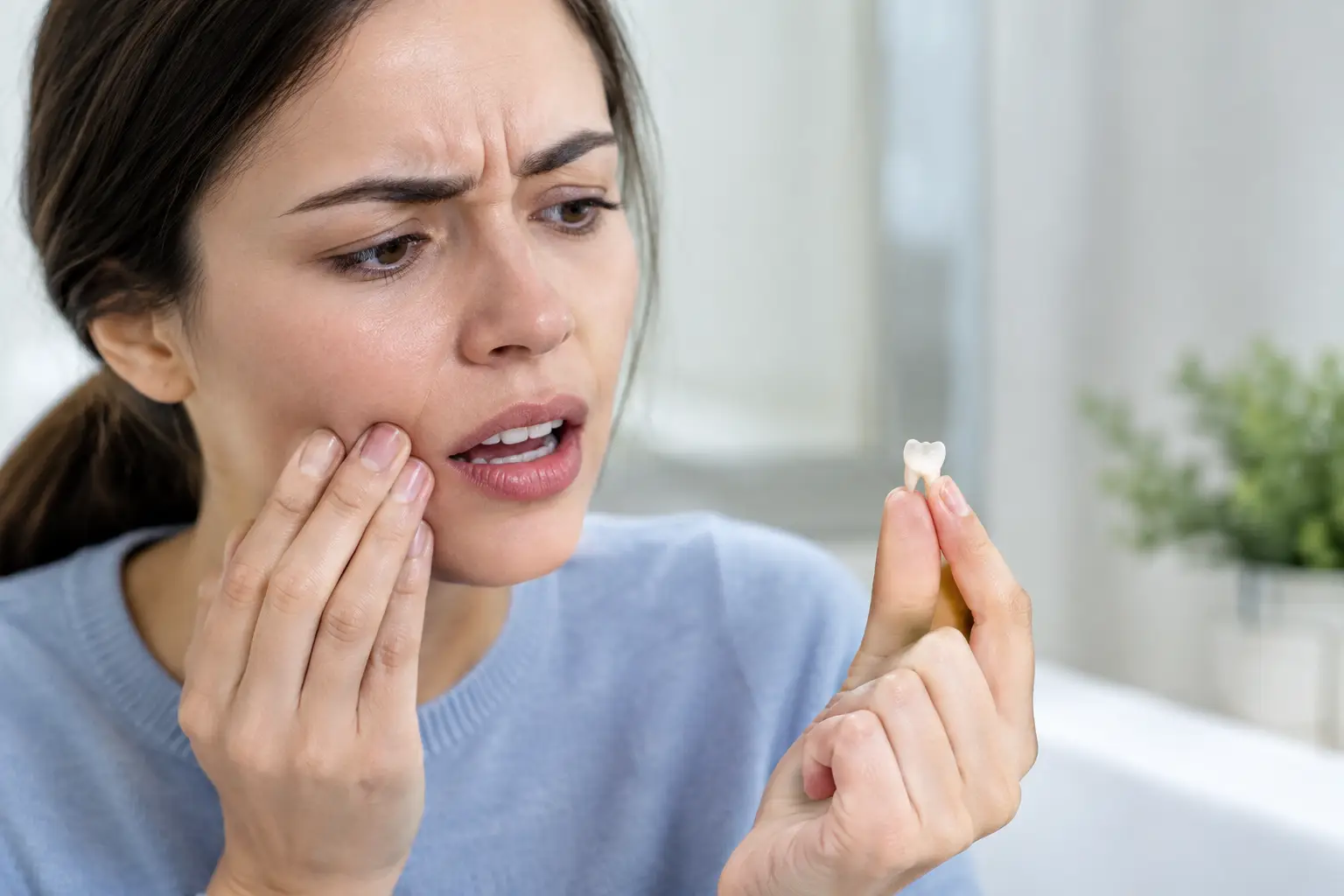
A knocked-out tooth can turn an ordinary afternoon at sport, school or home into a frightening moment. Knowing how to treat a knocked out tooth before you reach the dentist can make a real difference, particularly when it is an adult permanent tooth. Stay calm, act promptly and focus on protecting the delicate cells on the tooth’s root.
A tooth that has come completely out of its socket is a dental emergency. Call an emergency dentist straight away, even if you are unsure whether the tooth can be saved. The best outcomes are often possible when the tooth is returned to its socket quickly, ideally within 30 to 60 minutes.
First, check whether it is a baby tooth or adult tooth
This changes what you should do next. Do not put a baby tooth back into the socket. Replanting a primary tooth can harm the developing adult tooth beneath it. Keep your child comfortable, control any bleeding and arrange an urgent dental appointment so the injury can be assessed.
If it is an adult permanent tooth, there may be an opportunity to replant it. Permanent front teeth are commonly injured during contact sport, bike falls and playground accidents, but any adult tooth that has been knocked out deserves urgent attention.
If you cannot tell whether the tooth is a baby tooth or permanent tooth, contact a dentist for advice immediately. It is safer not to force a tooth back in when you are uncertain.
How to treat a knocked out tooth: the immediate steps
The goal is to preserve the tooth and its root surface while you make your way to emergency dental care. Follow these steps as soon as you can.
- Find the tooth and pick it up by the crown. The crown is the white chewing part that is normally visible in the mouth. Do not touch, scrub or scrape the root, as this can damage the living cells needed for successful healing.
- Gently rinse it if it is dirty. Hold it under a light stream of clean milk or saline if available. Clean running water can be used briefly if there is no alternative, but do not soak the tooth or use soap, disinfectant or a toothbrush. A quick rinse of around 10 seconds is enough.
- If it is a permanent tooth and the person is calm and alert, try to place it back into the socket. Carefully orient it the right way around, then ask them to bite gently on clean gauze or a folded clean cloth to hold it in position. Do not force it. If it does not slide in easily, stop and use a safe storage method instead.
- Keep the tooth moist and get to a dentist urgently. If you cannot reinsert it, place the tooth in a small container of cold milk. Sterile saline is another suitable option. A cooperative older child or adult may keep the tooth inside their cheek in saliva, but this is not appropriate for young children because of the risk of swallowing it.
Milk is often the most practical option at home, school or a sports ground. The key message is simple: do not let the tooth dry out, and do not leave it wrapped in a tissue or sitting dry in a pocket.
What to do about bleeding and pain
A knocked-out tooth can leave the gum socket bleeding, and soft-tissue injuries to the lips or tongue are common. Place clean gauze or a clean cloth over the area and apply steady, gentle pressure. An ice pack wrapped in a cloth against the outside of the cheek can help reduce swelling and discomfort.
For pain relief, follow the directions on an age-appropriate over-the-counter pain medicine, or ask your pharmacist for advice. Avoid placing aspirin directly on the gum, as it can burn the tissue. Try not to eat or drink anything very hot, and do not chew on the injured side.
Seek urgent medical help as well as dental care if there has been loss of consciousness, vomiting, confusion, severe facial swelling, heavy bleeding that will not stop, or concern about a head or neck injury. In an emergency, call 000.
Common mistakes that can reduce the chance of saving the tooth
When people are distressed, it is understandable to want to clean the tooth thoroughly. However, the root is not like the visible enamel of the crown. Its surface contains fragile cells that help the tooth reattach after it is replanted.
Avoid scrubbing the root, wrapping the tooth in dry paper towel, soaking it in alcohol or antiseptic, or leaving it in plain water for an extended period. Do not delay because the tooth looks dirty or because you think it may not be salvageable. Let the dentist make that assessment.
It is also worth remembering that a tooth can be knocked loose without falling out completely. If a tooth is pushed backwards, forwards or sideways, looks longer than usual, feels loose, or changes colour after an injury, it still needs a prompt dental examination. The damage may involve the tooth root, nerve, surrounding bone or neighbouring teeth even when the injury appears minor.
Why urgent dental care matters
At the appointment, the dentist will carefully examine the tooth, socket and surrounding tissues. X-rays may be needed to check for root fractures, pieces of tooth left in the socket, damage to nearby teeth or injury to the jawbone.
If the tooth has been replanted, it may be stabilised with a small flexible splint attached to nearby teeth. This keeps it steady while the tissues begin to heal, but still allows a small amount of normal movement. The dentist will also check your bite, clean any wounds and decide whether further treatment, such as root canal therapy, is likely to be needed.
The outcome depends on several factors. These include whether the tooth was permanent, how long it was out of the mouth, whether it dried out, how it was stored, the condition of the socket and the patient’s age. A tooth that cannot be saved is still not the end of the story. Modern restorative options can replace a missing tooth in a way that supports chewing, speech and a natural-looking smile.
Care after a tooth has been replanted
Your dentist will give instructions tailored to the injury, and following them closely gives the tooth the best possible environment to recover. A soft-food diet is usually advised for a period, with care taken not to bite directly into firm foods such as apples, crusty bread or corn on the cob.
Keep the area clean exactly as instructed. This may include gentle brushing with a soft toothbrush and a medicated mouth rinse for a short time. Attend every review appointment, even if the tooth feels fine. Healing changes can occur below the gumline and may not cause pain straight away.
Children and teenagers need particularly careful follow-up because their jaws and teeth are still developing. Early, supportive treatment can protect long-term oral health and help preserve options for any future restorative care.
Preventing another dental injury
Not every accident can be avoided, but a properly fitted mouthguard is one of the best protections for children and adults who play contact or high-impact sport. A custom-fitted mouthguard generally offers better comfort and retention than a bulky, shop-bought option, which makes it more likely to be worn consistently.
If someone in your family plays sport, keep the emergency steps in mind: find the tooth, hold it by the crown, keep it moist and call a dentist immediately. Prompt, gentle action can turn a stressful injury into the best possible chance for recovery.
If a tooth has been knocked out or loosened, Smile District Dental can provide calm, urgent assessment and explain each next step clearly. Call as soon as possible, bring the tooth safely if you have it, and let a caring dental team help protect your smile and confidence.